DIY Boost Controller for Drag Racing - Boost Butter
I’ve been having a blast working on a new microcontroller project.
Last year I put twin turbos on the Nova and made another run at Sick Summer Drag and Drive. That trip ended with a broken axle, but it also left me with a few ideas about how to simplify the turbo setup in the car. One of the newer rules requires cars to stage and leave the line within one second or take a penalty—which, honestly, is a great rule. It keeps cars race-ready for compeition outside of drag-and-drive.
What became obvious pretty quickly was that I needed a simple boost controller and transbrake solution that would let me spool the turbos and creep into the beams while holding a specific boost pressure. That sounds straightforward, but everything I found was either a full aftermarket ECU solution or just one small slice of the feature set I actually needed.
I still can’t believe how many racers take a stock GM ECU and throw it in the garbage when building a car. That’s hardened OEM-level tech with an incredible capability set. Meanwhile, I’ve seen plenty of aftermarket ECUs fry and take racers out of competition entirely. Talk about throwing the baby out with the bathwater.
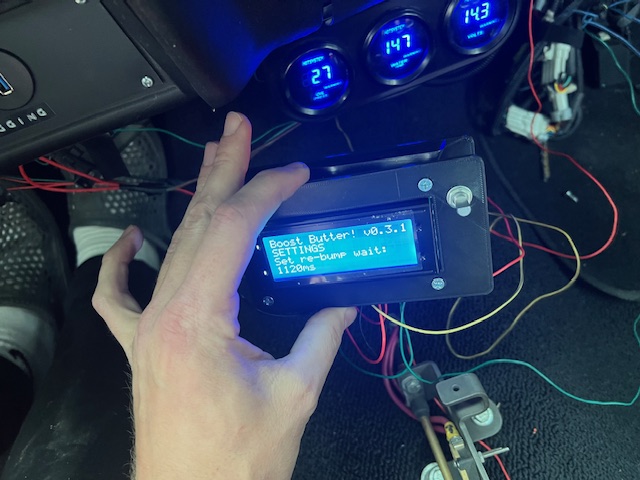
That was the genesis of Boost Butter. I wanted a purpose-built tool for boosted setups—something that offered pro-level functionality without requiring a full aftermarket engine management system.
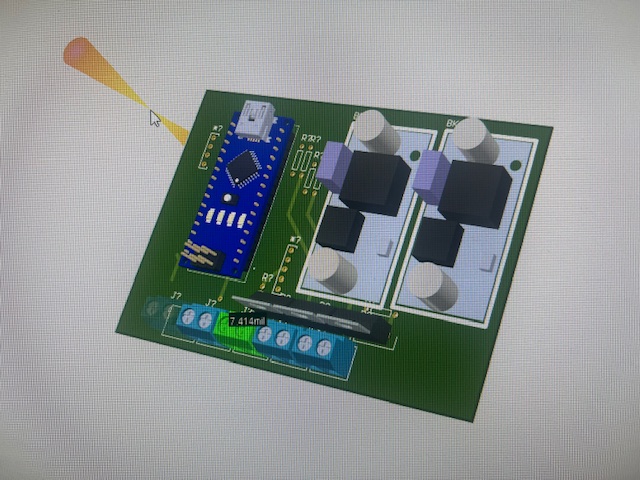
The funny part is I started this thinking it would be a pretty straightforward build. It wasn’t. It turned into one of those projects where every step reveals three more steps. I ended up doing something like 15 or 20 different CNC cuts just trying to get the board where I wanted it. Cut one, realize the mounting is wrong. Cut another, realize the connector orientation is dumb. Cut another, realize I didn’t leave enough clearance. Repeat until you stop being surprised.
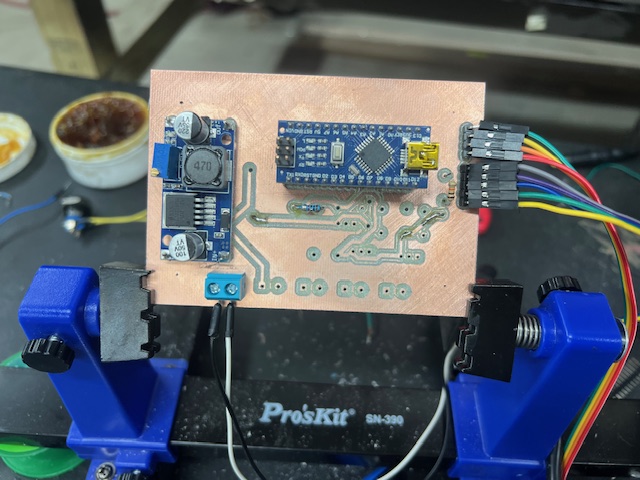
That cycle was frustrating, but it also forced me to get serious about the real-world side of building. Not just code. Not just wiring. Manufacturing reality. Tolerances. Assembly. Serviceability. The stuff you can ignore right up until you can’t. I found myself bouncing between SolidWorks, Blender, Altium, and whatever else I needed just to keep moving. Way more toolchain than I originally planned—but that’s what it took to turn the idea into something physical.
And it reminded me what I actually enjoy. I like building more than I like “business.” I can respect the big business legends, but I’m not trying to become one. I want to be the guy in the shop who keeps iterating until the thing works—and then keeps iterating until it’s clean.
Boost Butter has been that kind of project. Not a tidy success story. More like a stubborn, hands-on fight that taught me a ton—mostly by refusing to cooperate until I earned it. But that’s also why I’m proud of it. The goal wasn’t just to make a thing. The goal was to become the kind of builder who can.
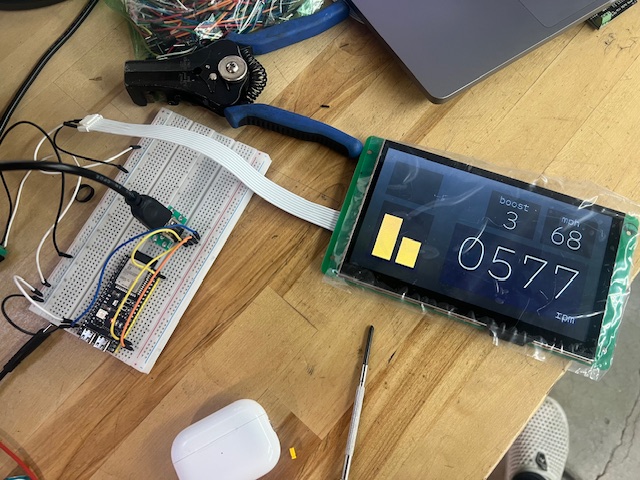
Next on the hit list: a full digital display and data logger that taps into the stock CAN bus.
More on that next time.